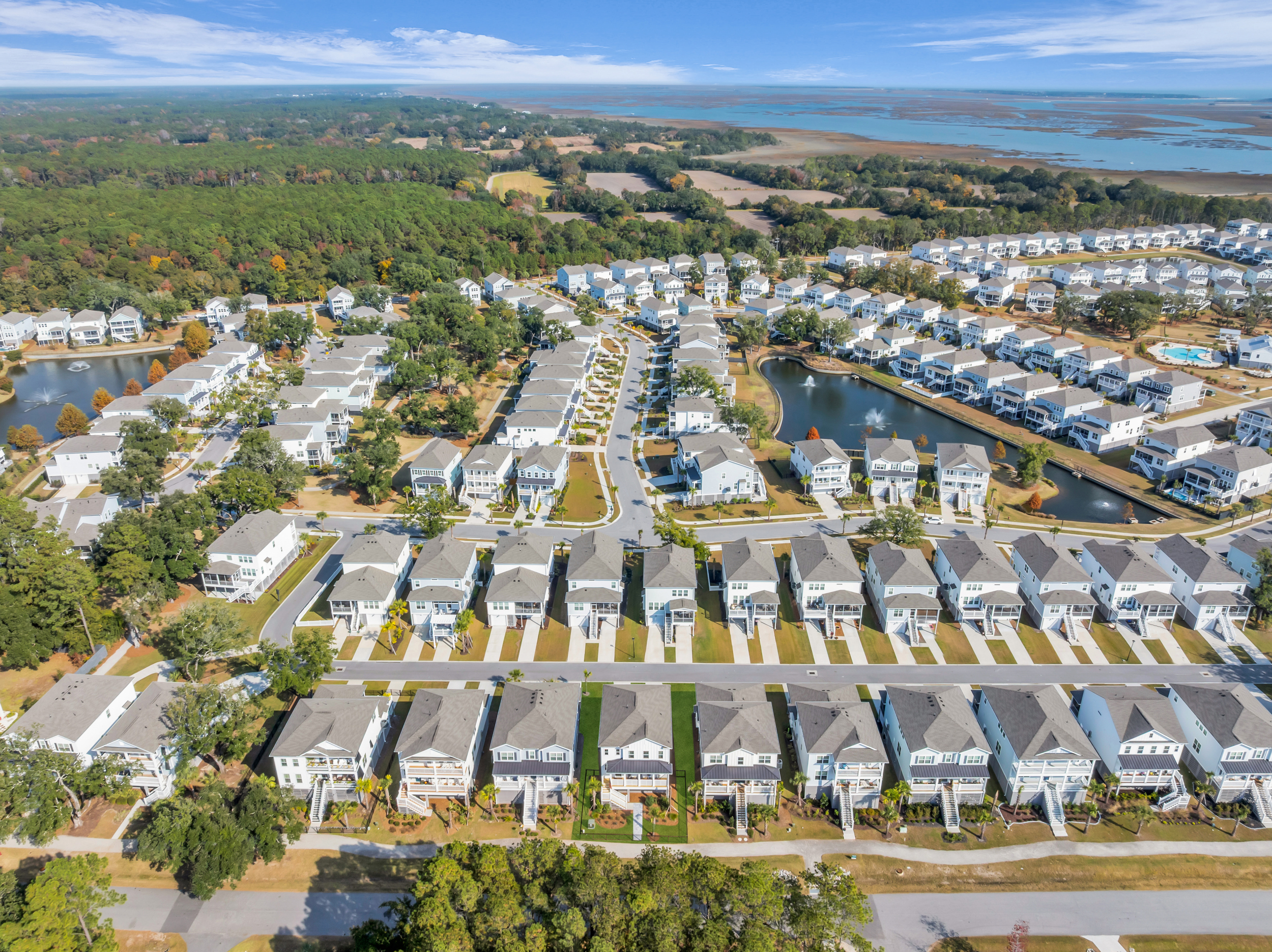


Two homes can be in the same Charleston neighborhood, have similar square footage, the same number of bedrooms, and comparable finishes—and still sell for noticeably different prices.
For homeowners, that can be confusing. If the house down the street sold for one price, why wouldn’t yours be worth roughly the same amount?
The answer is that buyers don’t purchase homes based on a checklist of features alone. They respond to location within the neighborhood, condition, presentation, pricing, timing, competition, and negotiating leverage. In Charleston-area markets like Daniel Island and Mount Pleasant, relatively small differences can have an outsized effect on how buyers perceive value.
Summary answer: Two similar Charleston homes can sell for completely different prices because buyers respond to more than square footage, bedrooms, and recent comparable sales. Micro-location, condition, presentation, pricing strategy, competition, marketing momentum, and negotiation all influence the final sale price.
Why Do Two Similar Homes in Charleston Sell for Completely Different Prices?
Because similar homes are not necessarily competing under similar circumstances.
A comparable sale tells you what one buyer was willing to pay for one property under a particular set of conditions. It does not automatically establish what the next home will sell for.
The final price is typically shaped by a combination of:
- The home’s exact location and lot
- Condition and perceived maintenance
- Renovations and functional improvements
- Floor plan and usability
- Presentation and photography
- Initial asking price
- Other homes available at the same time
- Buyer demand when the property launches
- Days on market and price-change history
- Seller motivation and terms
- The strength of the negotiation
That is why pricing a Charleston home requires more than finding three nearby sales and calculating a price per square foot.
The better question is: How will today’s buyers compare this home with every realistic alternative available to them?
-
Micro-Location Can Change the Value Equation
In Charleston real estate, location doesn’t stop at the neighborhood entrance.
Two homes in the same community can offer meaningfully different experiences. One property might have a particularly appealing setting, outdoor connection, privacy, view, street position, or proximity to neighborhood amenities. Another may have characteristics that some buyers perceive as less desirable.
This is especially relevant in markets such as Daniel Island and Mount Pleasant, where buyers often compare homes within a relatively narrow geographic area.
The differences may not look dramatic on a spreadsheet. They can feel significant during a showing.
Why this matters for sellers
Comparable sales need to be evaluated qualitatively, not simply mathematically.
A home that appears nearly identical based on public-facing property details may not be an equally strong comparable once you consider its setting, floor plan, updates, presentation, and buyer appeal.
-
Condition Affects More Than the Cost of Repairs
Buyers don’t always calculate condition by adding up the literal cost of improvements.
They also price in effort, uncertainty, inconvenience, and risk.
Imagine two similar homes:
Home A feels well maintained, clean, cohesive, and ready for the next owner.
Home B may be structurally comparable but has deferred cosmetic projects, worn finishes, several visible maintenance items, and rooms that feel dated.
A buyer may discount Home B by more than the actual cost of completing those projects because they are also considering the time and uncertainty involved.
This is one reason sellers should be careful about assuming:
“The buyer can just change that later.”
They can. But the question is how much they will expect to be compensated for doing it.
-
Presentation Changes Perceived Value
A home’s value and a buyer’s perception of that value are related—but they aren’t identical.
Presentation helps close the gap.
Thoughtful preparation can make it easier for buyers to understand a property’s strongest attributes. That may involve:
- Decluttering and simplifying rooms
- Addressing distracting maintenance issues
- Improving lighting
- Refining furniture placement
- Creating stronger curb appeal
- Professional photography
- Making the home’s best features immediately obvious
The objective isn’t to disguise flaws. It’s to present the property clearly enough that buyers can focus on what they are actually buying.
When two similar Charleston homes come to market, the home that communicates its value more effectively can create a very different response.
-
The Starting Price Can Influence the Final Price
This is one of the most misunderstood parts of selling a home.
A higher asking price does not necessarily create a higher sale price.
Sometimes it does the opposite.
An aggressive list price can reduce urgency among the buyers most likely to purchase the property. Those buyers may decide to wait, choose another home, or assume the seller isn’t positioned to negotiate realistically.
That can create a difficult sequence:
High initial price → weaker early activity → longer market time → price reduction → increased buyer leverage.
A strategically positioned home can produce a very different pattern:
Credible initial price → stronger early attention → more serious buyer engagement → improved seller leverage.
Strategic pricing isn’t about intentionally pricing a home below its value. It’s about positioning the property appropriately within the competitive market so buyers have a reason to act.
-
Early Momentum Matters
The first phase of a listing can be particularly important because that’s when the property is new to the buyers and agents already watching the market.
At 32 South Properties, we think about a listing launch as more than putting a home online.
Pricing, preparation, photography, positioning, marketing, and launch timing should work together.
The goal is to create early demand and momentum, rather than list first and figure out the strategy later.
When a home launches without a clear value proposition, sellers can lose an opportunity that is difficult to recreate with a later price adjustment.
-
Competition Changes From Week to Week
A comparable sale is historical. Your competition is happening now.
Suppose two nearly identical homes sell several months apart.
The first might have entered the market when buyers had few comparable choices. The second might launch alongside several attractive alternatives.
Those sellers aren’t operating in the same competitive environment.
This is why we look at more than sold properties when advising Charleston sellers. Active and pending listings can help reveal what buyers are seeing right now.
A seller’s competition isn’t simply “other homes in Charleston.”
It’s the group of properties a realistic buyer might choose instead.
-
Floor Plan and Function Can Matter More Than Square Footage
Two homes with similar square footage can live very differently.
Buyers may respond differently based on:
- How the kitchen connects to living areas
- Bedroom placement
- Storage
- Natural light
- Indoor-outdoor flow
- Flexibility for an office or bonus space
- The usefulness of secondary spaces
- How much of the square footage feels genuinely functional
This is one reason price-per-square-foot comparisons can be misleading when used by themselves.
Square footage measures quantity.
It doesn’t fully measure quality of use.
-
Negotiation Can Create a Different Outcome
The listing strategy gets a buyer to the table. The negotiation strategy helps determine what happens next.
Two sellers can receive relatively similar offers and ultimately walk away with different results.
Price is only one negotiating variable. Depending on the transaction, sellers may also need to evaluate contingencies, inspection terms, financing, timing, concessions, and other contract provisions.
Strong negotiation starts with understanding leverage.
A seller with meaningful buyer interest may be negotiating from a different position than a seller whose home has accumulated significant market time.
That is another reason early positioning matters: marketing and negotiation aren’t separate strategies. One can influence the other.
What Most Charleston Sellers Get Wrong
One of the biggest mistakes is anchoring too heavily to a single nearby sale.
A homeowner sees that a neighbor’s property sold for a certain amount and understandably thinks:
“Their home is similar to mine, so mine should sell for about the same—or more.”
Maybe.
But before reaching that conclusion, you need to know:
- How did that property compare in condition?
- Was its lot or location superior?
- What competing inventory existed?
- How was it initially priced?
- Did it receive immediate interest?
- How long was it on the market?
- Were there meaningful concessions or terms?
- What did buyers have available as alternatives?
The sale price is the end of the story.
To price another home intelligently, you need to understand the story that produced it.
Three Charleston Home-Sale Scenarios
These examples are illustrative, not representations of specific transactions.
Scenario 1: Similar homes, different launches
Two comparable Daniel Island homes enter the market within a relatively similar period.
The first seller prepares carefully, addresses several noticeable maintenance items, launches with professional presentation, and chooses a price designed around current competition.
The second seller starts higher because they want to “leave room to negotiate.”
The first property generates stronger early interest. The second sits longer and eventually adjusts its price.
The difference wasn’t simply the homes.
It was how buyers encountered them.
Scenario 2: Square footage hides the difference
Two Mount Pleasant properties look remarkably similar on paper.
One has a floor plan that makes the main living areas feel open and connected. The other has approximately comparable space, but some of that space feels less functional to buyers.
Using price per square foot alone might suggest they should trade similarly.
Buyer feedback tells a different story.
The market values usable experience, not just measurements.
Scenario 3: Negotiating leverage changes the outcome
Two sellers receive serious interest.
One home has generated strong early activity, giving the seller confidence that the current buyer isn’t necessarily the only opportunity.
The other has been on the market longer and has fewer active prospects.
Even with similar homes and similar opening offers, those sellers can have very different negotiating leverage.
The conditions surrounding an offer matter almost as much as the offer itself.
A Practical Framework for Comparing Two Charleston Homes
Before assuming a nearby sale establishes your home’s value, compare the properties across five categories.
- Property
- Lot and micro-location
- Square footage
- Floor plan
- Condition
- Renovations
- Outdoor spaces
- Distinctive property features
- Presentation
- Preparation before listing
- Photography and visual marketing
- Staging or furniture placement
- Curb appeal
- Overall first impression
- Positioning
- Original list price
- Price relative to competing homes
- Price changes
- Days on market
- Buyer perception of value
- Market Conditions
- Available competing inventory
- Pending competition
- Buyer activity at the time
- Timing of the listing
- Relative scarcity of the property type
- Negotiation
- Number and quality of interested buyers
- Seller’s negotiating leverage
- Contract terms
- Inspection negotiations
- Concessions and other terms affecting the overall transaction
If two homes differ meaningfully across several of these categories, they may not be as comparable as they initially appear.
The Charleston-Specific Market Lens
Charleston isn’t one uniform real estate market.
Even within Daniel Island and Mount Pleasant, buyers can make highly specific comparisons based on neighborhood, property type, setting, condition, and current alternatives.
That makes local context particularly important.
Online estimates and broad market averages can be useful reference points, but they can’t fully explain how a specific home competes at a specific moment.
The strongest pricing strategy combines comparable sales with an understanding of current competition, buyer behavior, property-specific advantages, and likely objections.
And because those conditions change, good pricing isn’t about finding one magical number.
It’s about making a calm, data-driven decision about where the property should sit in the market to maximize its opportunity.
The Bottom Line
Two similar Charleston homes can sell for completely different prices because homes don’t sell in a vacuum.
The market is responding to the entire proposition:
Property + location + condition + presentation + pricing + competition + momentum + negotiation.
That’s why the highest nearby sale isn’t automatically your home’s value—and the lowest nearby sale doesn’t necessarily limit it.
The objective is to understand precisely where your property fits, what today’s buyers will compare it against, and how to position it to create the strongest possible response.
If you’re considering selling in Daniel Island, Mount Pleasant, or the greater Charleston area and want to understand why your home may be worth more—or less—than a nearby sale suggests, our team at 32 South Properties is happy to help you work through the comparables, current competition, and positioning strategy before you make a decision.
Visit 32 South Properties to start the conversation.
Frequently Asked Questions
Why did my neighbor’s Charleston home sell for more than mine is estimated to be worth?
Your neighbor’s sale is only one piece of evidence. Differences in condition, lot, floor plan, updates, timing, competition, presentation, contract terms, and buyer demand can all affect the final price. A useful valuation should consider both recent comparable sales and how your property would compete in today’s market.
Is price per square foot a good way to value a Charleston home?
Price per square foot can provide context, but it shouldn’t be used alone. It doesn’t fully account for differences in condition, floor plan, lot, location, renovations, outdoor spaces, or other characteristics buyers may value differently.
Does the original listing price affect how much a home ultimately sells for?
It can. An asking price that doesn’t align with buyer expectations may weaken early activity and eventually increase buyer leverage. Strategic pricing is intended to position the property competitively and encourage serious attention when the listing reaches the market.
What makes a good comparable sale for a Charleston home?
A strong comparable generally shares meaningful characteristics with the subject property, including location, property type, size, condition, functionality, and other relevant features. Recency matters, but the circumstances surrounding the sale and differences between the properties should also be considered.
How can I determine what my Daniel Island or Mount Pleasant home is actually worth?
Start with recent comparable sales, then evaluate current and pending competition, your home’s condition and micro-location, buyer-relevant features, and current market conditions. A property-specific analysis is generally more useful than relying on one neighboring sale or an automated estimate.